

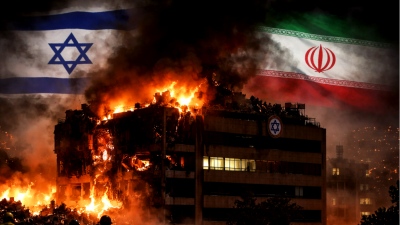
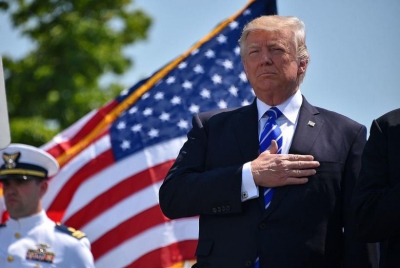
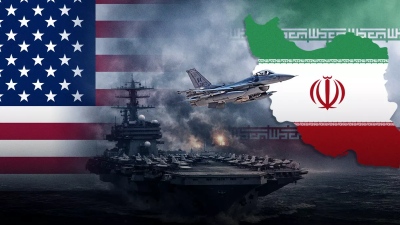
The US President, Donald Trump, is trapped in a "deadly" stalemate. Regardless of whether he was lured by Israeli Prime Minister Benjamin Netanyahu into ordering the attack on Iran, Trump appears unable to disengage from the war even four weeks after his command. Analysts now argue that Iran, by maintaining control over the Strait of Hormuz, has managed to impose de facto sanctions on the US. Political commentators emphasize that Iran now possesses greater bargaining power than the US, warning that the military operation could lead President Trump and the Republicans to a painful defeat in the upcoming November midterm elections. Meanwhile, the global economy hangs by a thread, with many claiming we face an unprecedented energy crisis, far worse than the oil crisis of the 1970s. The question remains: can President Trump emerge upright from a war he started, or has he already lost control? The answer will be given in the coming days, and its consequences will have global impact.
Another "TACO" moment
Wars, unlike tariffs, cannot be switched on or off to serve a president's whims or to permanently bolster collapsing markets. Thus, the fundamental question following President Donald Trump's postponement of threatened attacks on Iranian energy infrastructure is not whether he had another TACO moment ("Trump always chickens out"). The question is whether Trump can exit the war with Iran, even if he wanted to.
Seeking the exit
After days of erratic rhetoric, Trump signaled a potential de-escalation on Monday, 23 March, citing 15 points of agreement following productive talks with Iran. However, Tehran stated that no such talks took place. The most optimistic version of recent events is that the US and Iran have reached a point where the cost of escalation would be so horrific that both sides require an exit. Such moments can often mark the beginning of the end for wars.
Threats
Trump had pushed his adversaries to the limit by threatening to bomb Iranian power plants if the Strait of Hormuz—a strategic chokepoint for oil exports—was not opened. Tehran responded by promising to turn critical infrastructure in US-allied Gulf nations to ashes. The conflict could trigger a global recession and worsen humanitarian conditions for the Iranian citizens Trump promised to help. But there are many reasons to remain skeptical about what comes next.
Zero credibility
As CNN notes in its analysis, days of unstable and contradictory rhetoric from Trump and his administration, along with their inability to present a coherent narrative or exit strategy, mean any US statement lacks credibility. The President's habit of blustering during his own ultimatums means no one would be surprised if he violated the five-day suspension of strikes on the country's power plants. Some cynics note the suspension covers the entire trading week; with stocks falling and oil prices rising after the weekend, he may simply be seeking to create a cushion of market stability. Indeed, the tactic worked: the Dow, S&P 500, and Nasdaq rose over 1% on Monday, while Brent crude fell 11%. American drivers are hoping for a reprieve at the gas pumps.
Buying time
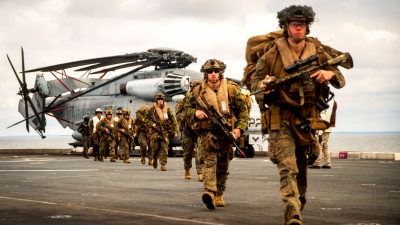
Trump may want to buy time for another reason: the US forces required to invade Kharg Island—the heart of the Iranian oil industry—or to seize coastal areas in the Strait, have not yet fully assembled. A Marine unit moving from Japan may arrive soon, but a second only departed from the US West Coast last week. Furthermore, Trump’s penchant for hyperbole is well-known. Experience suggests that claims of "great progress" in negotiations may be exaggerations, even if deliberate misleading is sometimes used by politicians to create room for diplomacy. The President's extreme mood swings—talking of "de-escalation" one day and escalation the next—are incompatible with the "tradition" of steady leadership during wartime. But this is quintessential Trump. By Monday, everything looked like a ruse to claim his tough tactics had yielded diplomatic results.
Familiar tactics
This unpredictable method and the tendency to mitigate crises he created is familiar from Trump's personal, business, and political life. Each day often unfolds as an effort to remain standing until evening. With this method, Trump postpones the consequences of his actions in an endless, improvised dance. However, there is a serious possibility that Trump's erratic method may be tested beyond its limits in the Persian Gulf. Iran may be weakened by US and Israeli strikes, suffering massive losses in naval, air, and land assets during a war that has eliminated senior leaders of the Islamic regime.
Iran maintains momentum
But as the conflict enters its fourth week, Iran has also demonstrated its strength, effectively closing the Strait of Hormuz and holding the global economy—and Republican hopes for the November elections—hostage. Logic suggests that a regime that was already ultra-radical before the war is unlikely to become more receptive to Trump’s demands after the assassination of its Supreme Leader and ongoing attacks by US and Israeli missiles.
Hardline interlocutors
Trump's terms for ending the war—likely including Iran abandoning its nuclear program and long-range ballistic missiles—may be incompatible. The last three weeks demonstrate exactly why an "outlaw" regime would decide to maintain such security policies against future foreign attacks. Even if talks open—and Pakistan has offered to host—it is unclear who would negotiate for Iran. A regime with decentralized power that has lost key players may struggle to make collective decisions. If, as some experts believe, the Revolutionary Guard (IRGC) now has full control, they may be even more hardline than before. Furthermore, in the past, Washington spoke with relatively moderate Iranian officials, only to find radical elements opposing any compromise.
No signs of collapse
It would also not be surprising if Iran's leaders interpreted the President's indecisive moves and emotional social media posts as signs that their strategy of imposing economic consequences on Trump is working. No one can know for sure what will happen in Iran. It is possible that the assassinations of top leaders and US-Israeli strikes have caused fatal rifts in the regime not yet visible. But so far, there are no clear public signs of dissolution. The air war has severely degraded Iran's regional threat. But if brute force hasn't brought it to its knees, Trump has yet to explain why Iran would surrender its main advantage—control of the Strait—without significant US concessions. It is easy, however, to see why the President might be tempted by the prospect of talks.
Desperate for an exit, unpleasant choices
He needs an exit because many of his potential options are unpleasant. He could escalate the war in its current form—focusing US power on Iranian assets around the Strait—but there are no guarantees this would degrade Tehran's capabilities enough for ships to pass safely. He could commit ground forces, but that would be a political line reminiscent of the "eternal wars" Trump had campaigned against. The TACO option—and a declaration of victory, true or not—seems attractive. But withdrawing would leave US allies in the Gulf, who opposed the war, exposed to an angry and emboldened Iran. Ending the war without controlling Iran's stockpiles of highly enriched uranium might allow it to develop nuclear weapons in the future, undermining Trump’s most consistent argument for the war. Presidents often face crises without good options, but few find themselves in such a stalemate as the one Trump created for himself in Iran.
Simon Johnson (Economist): Iran has effectively imposed sanctions on the US
Indicative of Trump’s deadlock is the assessment of the distinguished American-British economist and 2024 Nobel Prize winner, Simon Johnson, who argues that Iran has effectively imposed sanctions on the US. According to his analysis in Project Syndicate, Johnson, who served as Chief Economist at the IMF and taught at MIT, believes that Iran, by closing the strategic Strait of Hormuz, has essentially reversed the dynamics of sanctions. He argues that Iran is blocking oil flow from US-allied Arab nations while continuing exports to China, effectively imposing "de facto sanctions" on the American economy.
Massive impact on American lives
Johnson, author of Power and Progress, also refers to the direct impact of this situation on the daily lives of US citizens, as Brent crude rising above $100 directly affects fuel costs in North America. He warns that rising gasoline and diesel prices will increase transport and food costs, hitting Donald Trump’s voter base—primarily farmers and truck drivers—and potentially influencing the results of the November midterms.
Catastrophic stagflation
Johnson, who currently serves as an AI ambassador in the UK and co-chair of the Systemic Risk Council, emphasizes that high energy prices limit the US Federal Reserve's ability to cut interest rates. He compares the situation to the Arthur Burns era in the 1970s, when failure to tackle inflation led to catastrophic stagflation.
The role of Russia
Johnson argues that Iran, supported by intelligence and drones from Russia, is biding its time, as the Kremlin benefits from rising oil prices and wishes to distract US resources from the war in Ukraine. He notes that despite technological and anti-aircraft reinforcements, short-term economic pressures burden the US, and the key question is whether the US electoral system can overcome these "inverted sanctions" before economic endurance is exhausted.
Defeat looms for Trump and Republicans
The US President, Donald Trump, may suffer a defeat in the 3 November midterms due to the conflict in the Middle East, stated Belgian professor of international politics David Crickemans from the University of Antwerp, as reported by VRT NWS. "Trump may lose because of this adventure," warned Crickemans, who believes the White House leader seriously underestimated Iran and now doesn't know how to exit this war. Crickemans also noted that Trump’s decision to delay attacks on Iranian infrastructure might have been an attempt to calm the oil market. "Trump thought he was setting the pace of this war, but in reality, Iran is doing it now," the professor concluded.
Jasmine El-Gamal (Former Pentagon Advisor): Iran holds greater bargaining power
Iran now possesses greater bargaining power against the US, as it can "cause chaos across the entire region" and "controls the Strait of Hormuz," argues Jasmine El-Gamal, a former Pentagon advisor on Middle East affairs. "Because Iran has remained standing against the US and Israel and because it controls the Strait of Hormuz, it enters new negotiations with greater bargaining power," she stated. Some of the conditions Iran might seek include "security guarantees" and ensuring the regime remains firmly established, as it can threaten to "cause chaos" if provoked. Her statements come amid conflicting messages: President Trump claimed there are "significant points of agreement" for a ceasefire, while Iran publicly denied direct negotiations. Meanwhile, Pakistan is reportedly preparing to host talks between the two sides, with Vice President JD Vance expected to participate.
www.bankingnews.gr

Σχόλια αναγνωστών